When to Re-pipe Your Home: Signs, Costs, and What to Expect in Brevard County

Whole-home repiping is the kind of plumbing decision most homeowners defer as long as possible. The signs that it is needed tend to arrive gradually: a leak here, some discoloration there, water pressure that seems a little lower than it used to be, and none of those individual symptoms feels urgent enough to trigger a significant investment. The problem with deferring is that each repair to an aging pipe system is a temporary fix for a structure that is failing as a whole, and the cumulative cost of ongoing repairs frequently exceeds the cost of the repipe that would have addressed it all at once.
If your Brevard County home was built before 1985 and you are experiencing recurring plumbing problems, it is worth taking seriously whether repiping is the right answer. Here is what the warning signs look like, what the process involves, and how to think about the cost-benefit decision for a Palm Bay or Melbourne home. Experiencing recurring plumbing problems in a Brevard County home built before 1985? Call Certified Plumbing today to schedule a repiping consultation or contact us online.
Who Is Most Likely to Need Repiping in Brevard County
Homes Built Before 1985 With Original Pipe Materials
The homes most likely to need repiping in Palm Bay and Melbourne are those built before 1985 with original galvanized steel or polybutylene pipes still in place. Galvanized steel pipes typically have a service life of 40 to 70 years, depending on water chemistry and usage; Brevard County’s hard water accelerates corrosion, shortening that range. Galvanized pipes in this region that have not been replaced are approaching or past the end of their reliable service life. Polybutylene pipes, installed in many Florida homes from the late 1970s through the mid-1990s, have a documented history of premature failure and are a strong candidate for proactive replacement, regardless of current symptoms.
Warning Signs That Point Toward Repiping
Multiple Leaks in Different Locations
A single leak in an aging home can be a localized repair. Two or three leaks at different locations within a short period are a sign that the pipe system is failing as a whole rather than at a single point. When the failure pattern is distributed throughout the home, addressing each leak individually with spot repairs is like patching a roof one shingle at a time; it keeps the immediate problem from getting worse but does not address the underlying deterioration driving them all.
Persistent Low Water Pressure Throughout the Home
Galvanized steel pipes corrode from the inside out, and the corrosion buildup progressively narrows the internal diameter of the pipe over decades. A home that had adequate water pressure in 1985 may have significantly reduced pressure today because the interior of the supply lines has been partially filled with mineral and rust deposits. Low pressure at a single fixture points to a localized issue, but low pressure throughout the home in an older property points to this systemic pipe restriction. Our residential plumbing team can assess whether your pressure issue is fixture-specific or system-wide.
Discolored or Rusty Water
Brown or orange-tinted water from supply lines is a direct indicator of active pipe corrosion entering the water supply. This is both a plumbing infrastructure problem and a water quality issue. Discoloration that appears after water has been sitting in the pipes overnight — running clear after a minute of flow but returning to discolored after the pipes sit again is a consistent sign that corrosion from the pipe interior is the source.
Visible Corrosion on Pipe Runs
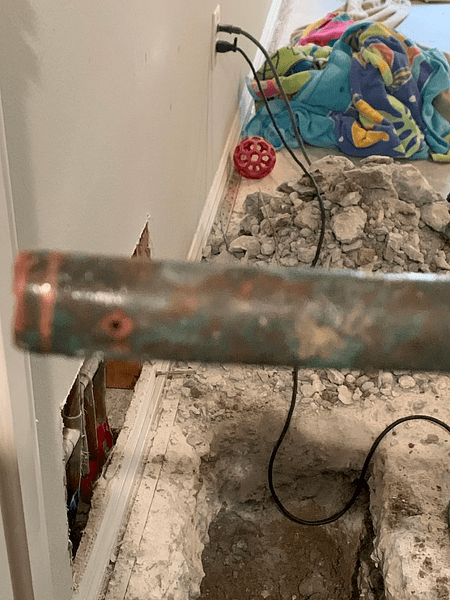
Corrosion visible on pipe sections under sinks, in the garage, or in utility spaces is the accessible evidence of what is happening throughout the full pipe run inside walls and under slabs. Significant visible corrosion on accessible sections strongly suggests the same deterioration process has progressed on sections that are not visible.
A History of Slab Leaks
A single slab leak is a serious issue that requires repair. A history of slab leaks in an older home with original pipes is a strong indicator that the piping beneath the foundation has deteriorated to the point where repiping above the slab eliminates the ongoing risk of slab leaks entirely. Our slab leak service frequently identifies candidates for whole-home repiping during inspection.
What the Repiping Process Involves
What Happens During a Whole-Home Repipe
Whole-home repiping replaces the supply lines throughout the home with modern copper or PEX piping. The process typically involves:
- Assessment of the existing system to confirm scope and identify any complicating factors
- Temporary water shutoff during the active work period
- Accessing pipe runs through walls, ceilings, and floors as needed depending on the home’s layout
- Installation of new copper or PEX supply lines throughout the home
- Connection to fixtures including sinks, toilets, showers, and water heater
- Patching of any wall or ceiling access points opened during the work
- Pressure testing and inspection before completion
The timeline for a typical Brevard County home repipe is 1 to 3 days, depending on the home’s size and layout complexity. Most homeowners can remain in the home during the project with water service restored each evening.
Florida-Specific Considerations
Brevard County’s hard water accelerates corrosion in galvanized pipes faster than the national average, and the high humidity in unconditioned spaces like garages and crawl spaces means pipe deterioration in those areas progresses faster than in drier climates. Florida homes also frequently have longer pipe runs to outdoor fixtures and pool equipment, which increases the scope of a whole-home repipe compared to homes in northern climates.
The Cost-Benefit Calculation
When Repiping Is More Economical Than Ongoing Repair
A whole-home repipe is a significant upfront investment, but for homes with the right indicators, it is typically more economical than continued piecemeal repairs when the full cost comparison is made honestly. Each slab leak repair, each spot fix on a corroded section, and each water damage event from a failed pipe joint carries a cumulative cost. A repipe eliminates all of those future costs for the new pipe material’s service life. For homeowners planning to stay in their home for 10 or more years, the calculation almost always favors repiping over continued repair on a system with multiple warning signs. For Q4 timing specifically, homeowners who want to complete a repipe before year-end should schedule consultations early since the Q4 project season fills quickly. Contact our residential plumbing team to discuss your specific situation.
Conclusion
Whole-home repiping is not a decision that should be put off until a catastrophic pipe failure forces it. The warning signs recurring leaks, chronic low pressure, discolored water, visible corrosion, and a history of slab leaks are a reliable signal that a Brevard County home’s pipe system has deteriorated beyond the point where ongoing repairs are the most economical path forward. For Palm Bay and Melbourne homes built before 1985 with original galvanized or polybutylene pipes, a repiping consultation is a worthwhile hour-long investment before another repair. Call Certified Plumbing today, visit our residential plumbing page, or contact us online to schedule a consultation.